
Mnemonics Unlock Memory
Meaningful memory cues make facts easier to remember.
Excellent Educator, 3(15), 9-10, 2026
🧠 Research in Brief
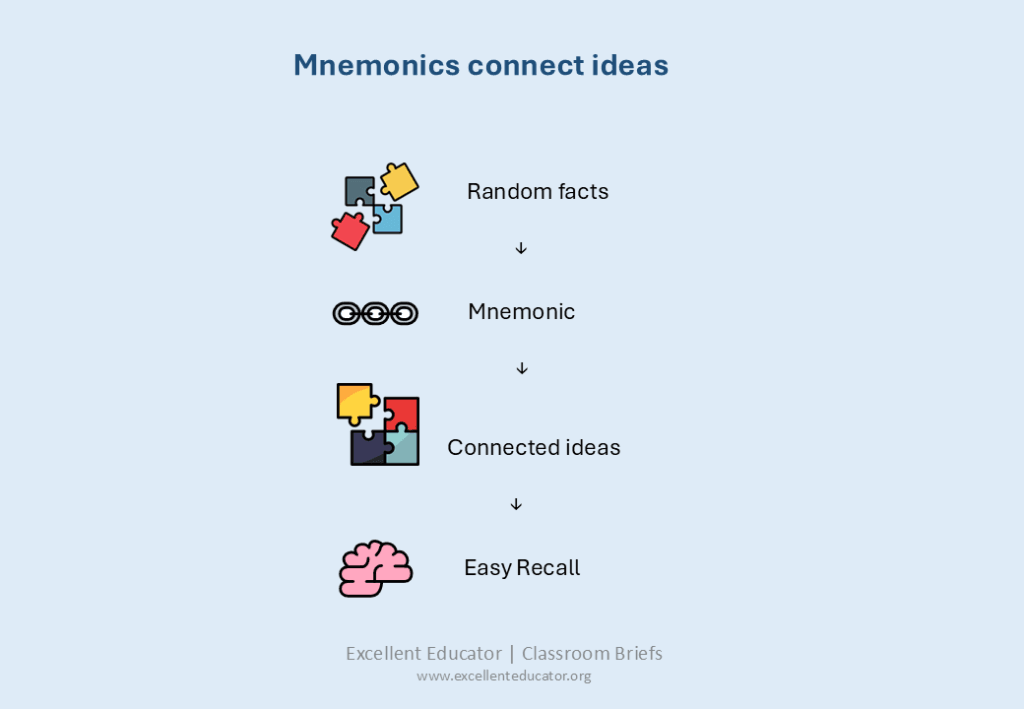
This article highlights how mnemonic techniques such as acronyms, stories, rhymes, visual imagery, and associations create powerful retrieval cues. These strategies help learners organise information, improve recall, and reduce the difficulty of remembering large amounts of factual content. However, mnemonics are most effective when they support conceptual understanding and are combined with retrieval practice and regular review.
✔ Try Tomorrow
- Introduce one mnemonic when teaching difficult factual content.
- Encourage students to create their own acronyms, stories, or visual associations.
- Combine mnemonics with retrieval practice and spaced review.
★ One Key Takeaway
Mnemonics make facts easier to remember, but understanding gives them lasting value.
Keywords
Mnemonics, retrieval cues, memory strategies, meaningful learning, recall, long-term retention
📖 Original Research
Shrivastava, S. R. (2026). Advocating the Optimal Use of Mnemonics to Turn Facts into Forever in Medical Education. Journal of Datta Meghe Institute of Medical Sciences University, 21, 1–3.